
Why Doesn't AI Recommend Your Brand After You've Published So Much Content?
WidenGEO uses answers to real buyer questions to find missing information, plan content updates, and check what changes after publication.
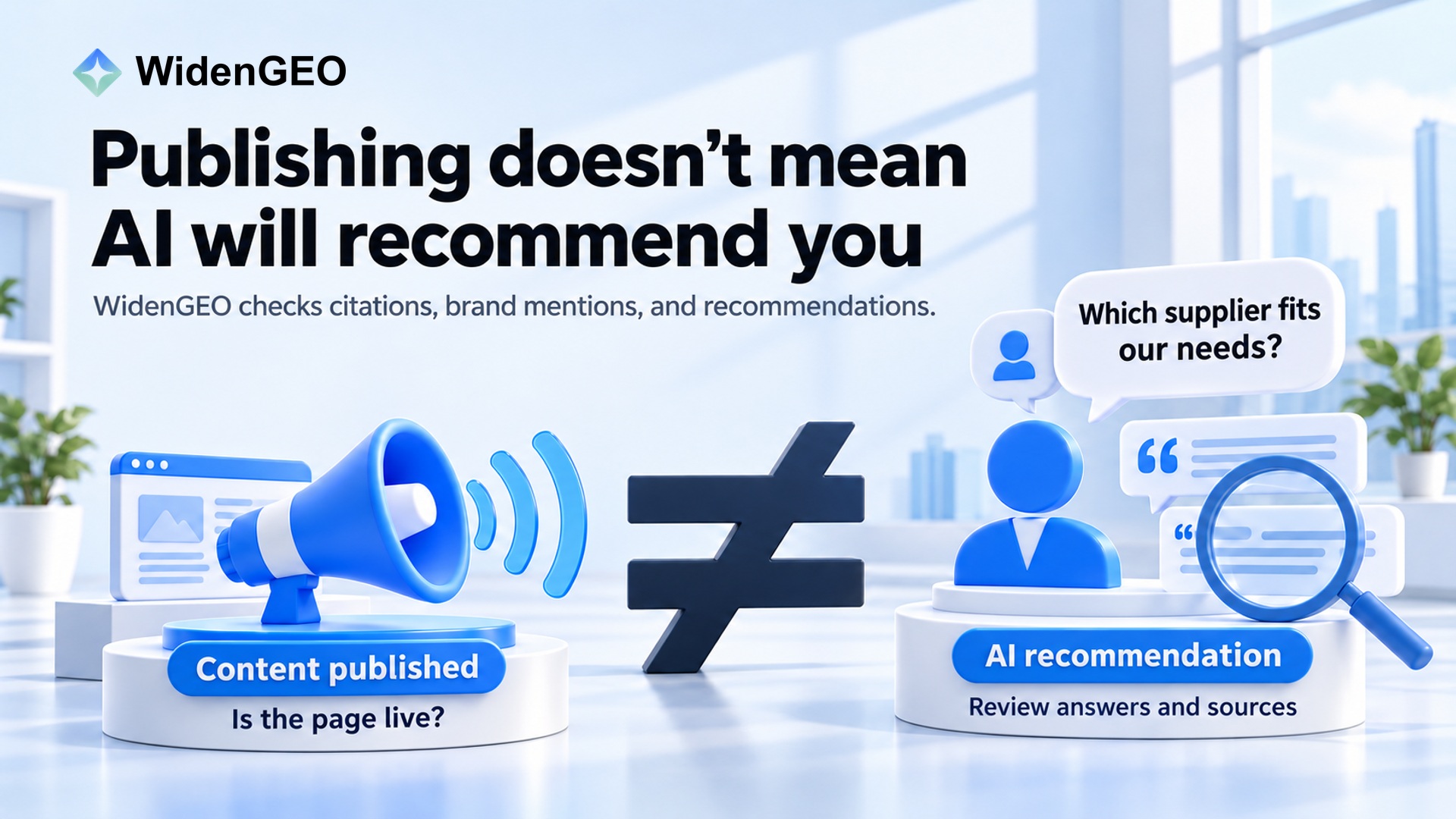
Illustration distinguishing published content from AI recommendations.
Your company has published its profile and product updates. A buyer asks an AI assistant which suppliers can retrofit an existing production line, and your brand never comes up. Before commissioning another article, look at what the buyer needs to know. Can the existing equipment stay? Which lines can the supplier retrofit? What happens to production during installation?
A site full of new equipment specifications may leave those questions open. A company may already describe its retrofit service while an answer still cites an earlier product page. The same prompt may also produce a brand mention on one occasion and omit it on another. Each situation calls for a different next step.
See how AI answers the questions buyers already ask
WidenGEO starts with common sales and presales questions. Finding a retrofit supplier, checking compatibility with older equipment, and comparing retrofit options are distinct buying tasks. The team agrees on priority questions and platforms with the business, then records the initial answers for comparison.
Track publication, citation, brand mentions, and recommendations as separate events. An answer may cite an equipment page to explain a technical concept. It may mention the brand as a seller of new machinery. A buyer looking for a retrofit needs a clear description of the work the supplier can do and the conditions it can handle.
The team also checks the reasons answers give for including other suppliers. If those answers regularly highlight the ability to keep existing equipment and never describe whether your company offers that option, start by checking what your public material says about it.
Find the missing information before planning new content
Compare the answers with confirmed business facts, current website pages, and other public materials. If the website only lists machinery specifications, add a service description explaining which lines can be retrofitted, what compatibility depends on, and how implementation works. When answers repeatedly cite an old page, identify which outdated material you can update. If an answer displays no citations, record that and start with the public material you can inspect.
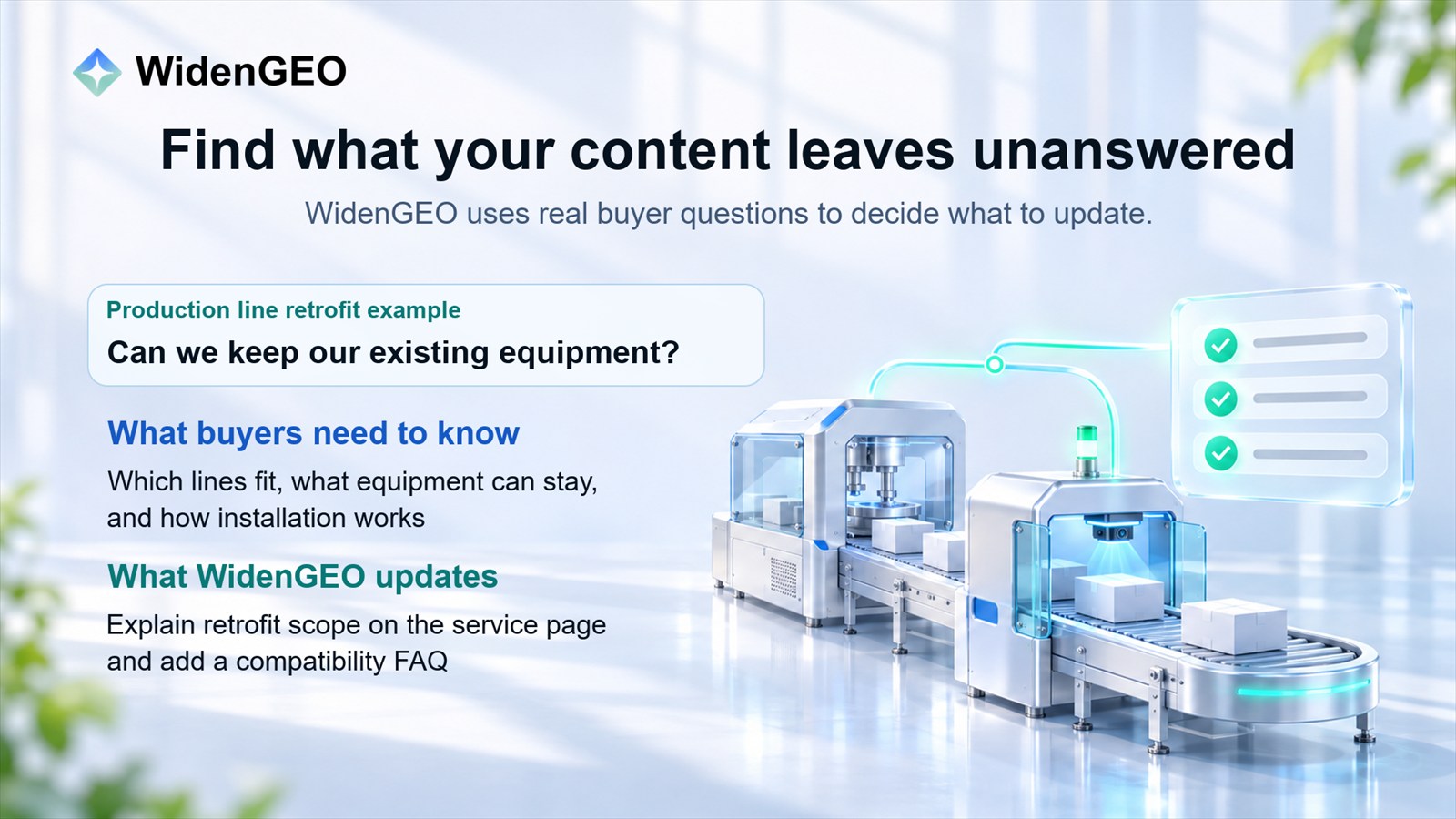
Illustrative example of filling information gaps; not a measured project outcome or performance claim.
Let the question and the sources guide the format and channel. A service page can define the scope of retrofit work. An FAQ can answer whether customers can keep existing equipment. If relevant answers frequently cite industry publications, consider whether an article on retrofit conditions fits that channel. Record the page address, publication date, and main change so you can match the update to a question in the next round.
Retest the same questions and keep the evidence
WidenGEO returns to the agreed prompts and platforms. The team keeps timestamps, screenshots of answers, and visible citations so you can compare rounds. If you track brand mention rates, check which questions, platforms, and answer samples went into the calculation.
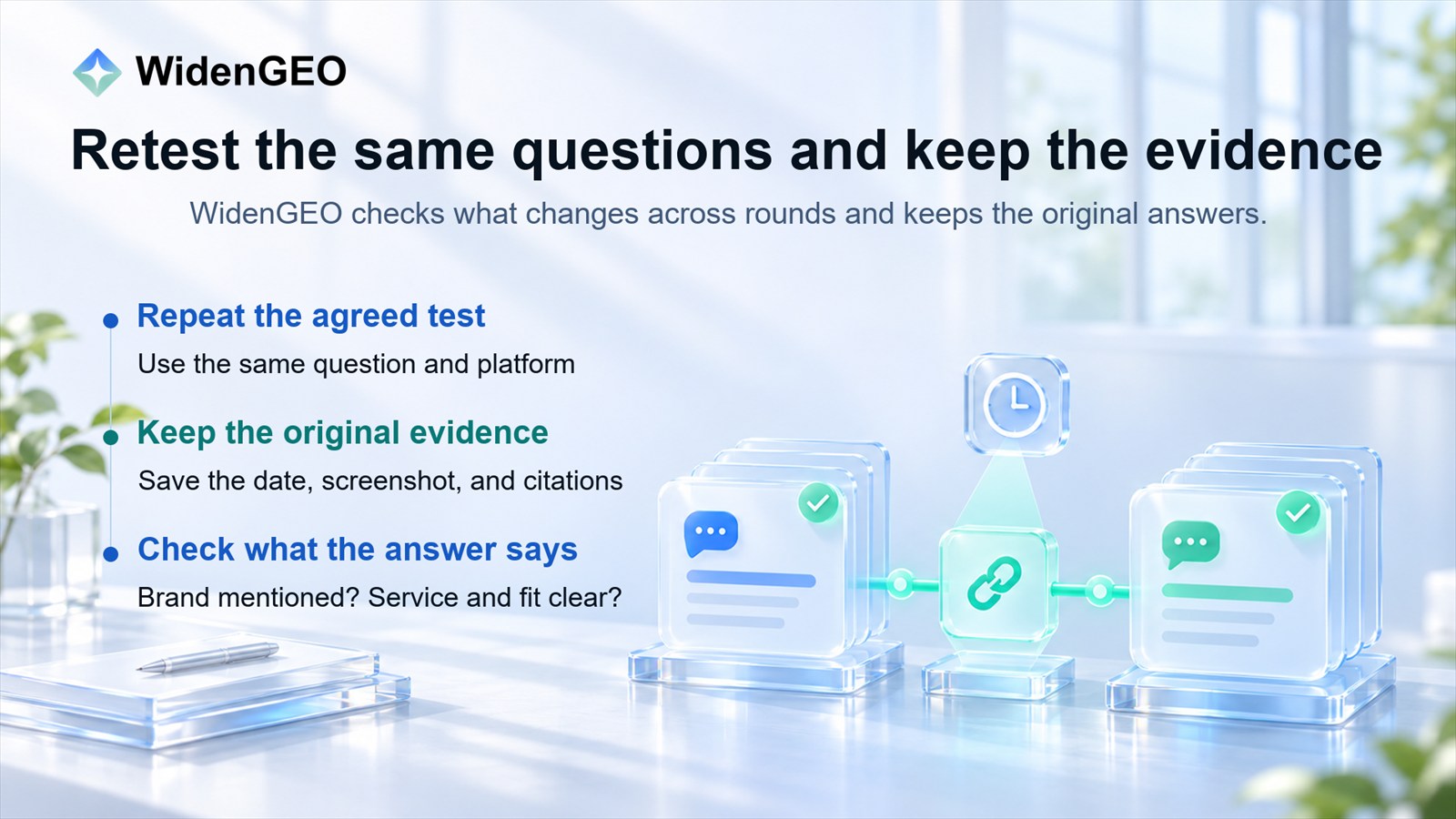
Illustrative GEO monitoring interface; any visual trend is schematic and does not represent actual project data or results.
Suppose a later answer starts describing your brand as a retrofit supplier where an earlier answer only described an equipment seller. Look next at whether the brand is listed as suitable for the buyer's requirements, whether the answer explains compatibility, and whether the visible sources have changed.
Answers can vary by platform, time, and wording. Review several rounds alongside publication records before drawing conclusions about a change. The periodic report gives your team a way to inspect the underlying answers and published pages.
Turn the findings into the next set of updates
- Priority answers repeatedly omit the brand. Check whether your public material explains the capability the buyer asked about. Fill a concrete gap, such as whether customers can retain their old equipment, then revisit the relevant questions.
- The brand appears with the wrong service scope. Update outdated materials you control and align the description across your website and other channels you can maintain. Track whether the same error returns.
- The brand appears as an option with vague reasoning. Add verifiable support for the relevant strength, such as equipment compatibility, project conditions, or a case example you can share. Check whether subsequent answers explain those details.
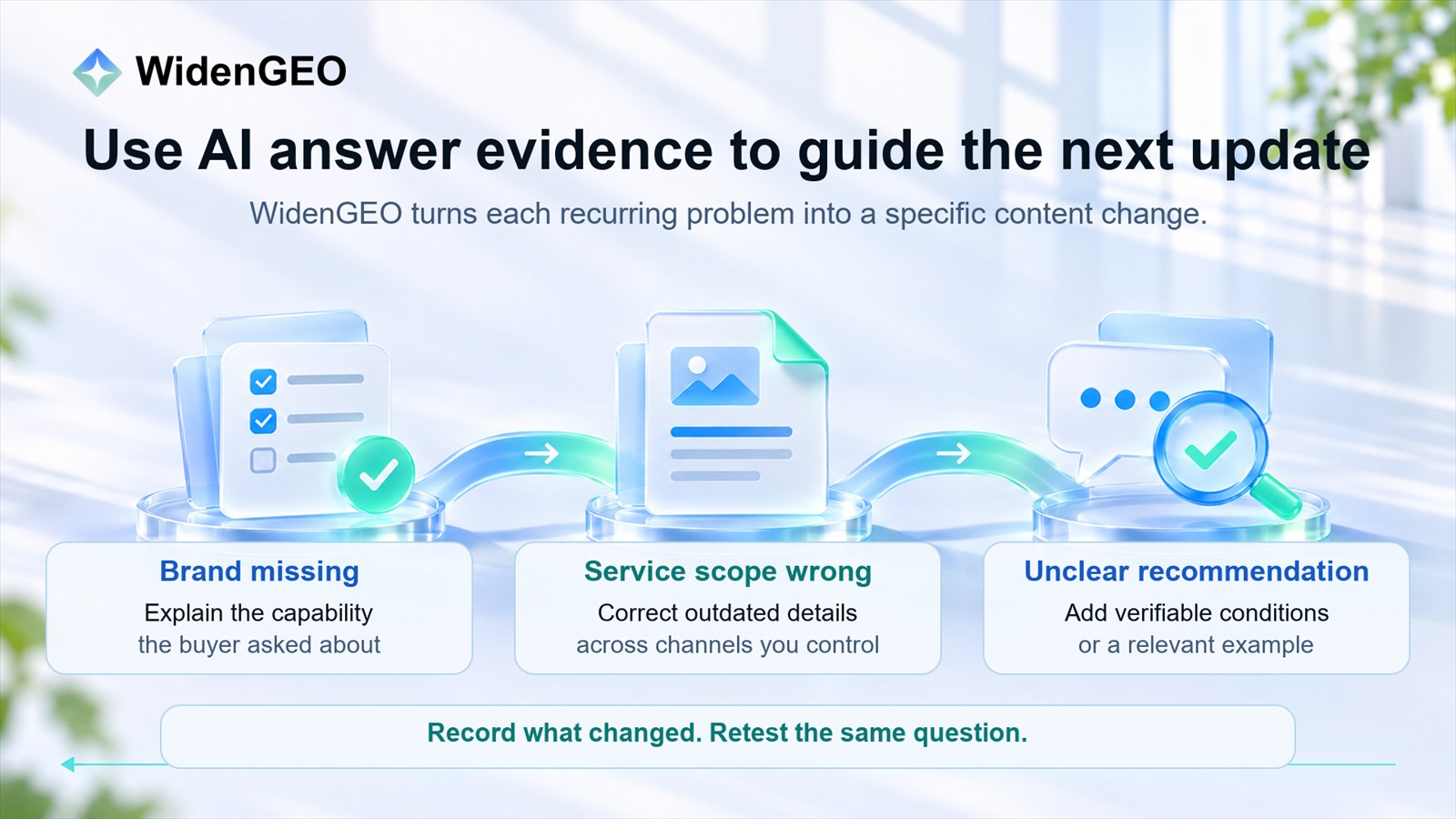
Workflow illustration showing how AI answer evidence can inform the next content update.
For each update, keep a record of the question that prompted it, the content that changed, and the question you'll use to check again. WidenGEO handles assessment, content, publishing, and monitoring in the same engagement so that findings from one round can inform the next.
If you've already published a body of content, share your website, existing articles, and a few common customer questions with WidenGEO to request a GEO assessment.
Learn more about WidenGEO
Visit the website: WidenGEO official website
Submit your project: Contact us