
How GEO Differs Across Six Industries
A customer booking a home service, a factory adding equipment, and a retailer replacing its inventory system need different facts before they can act. WidenGEO uses industry experience to turn those buying questions into content, publishing plans, and follow-up checks.
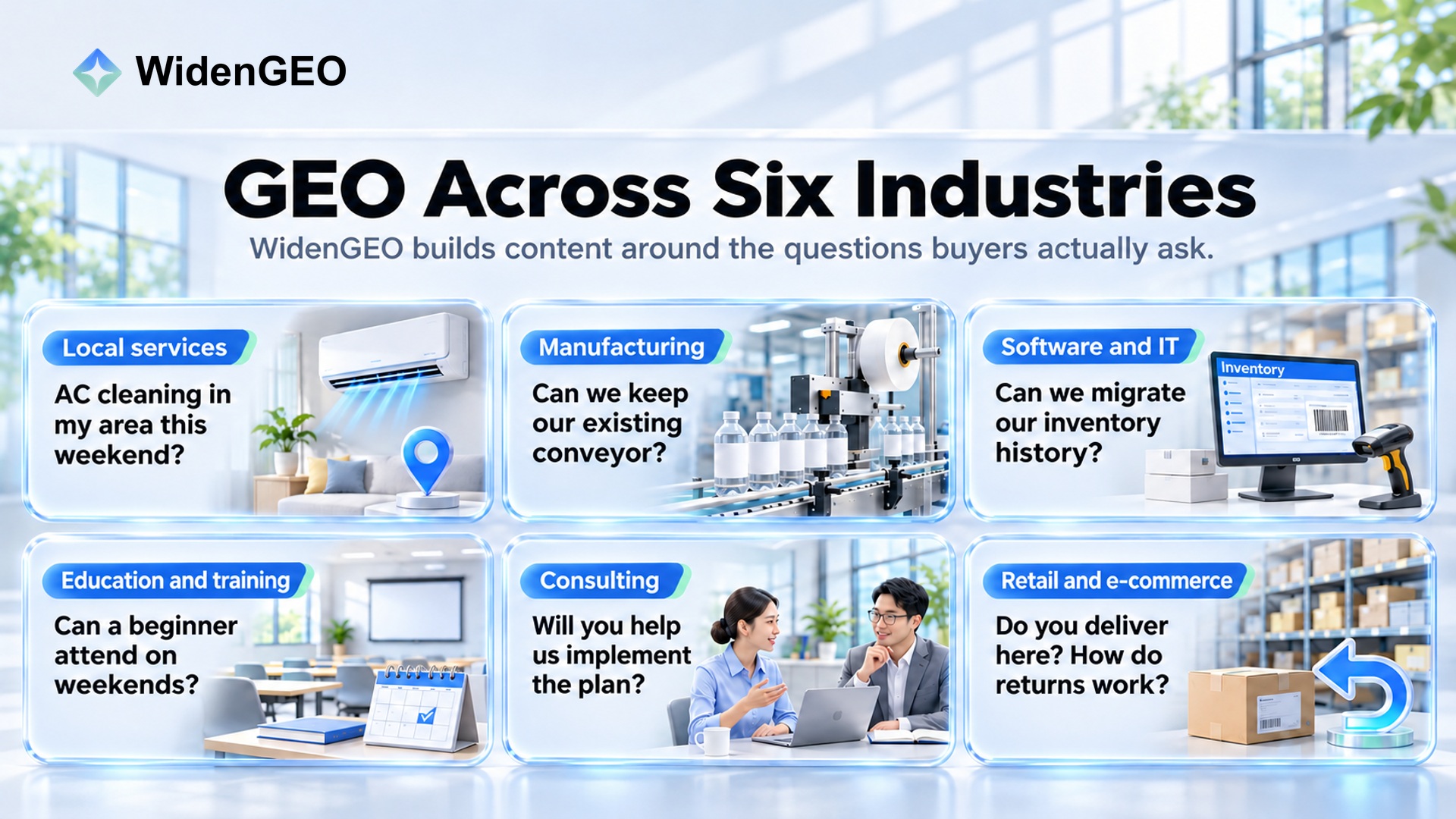
Illustration of GEO content and buyer questions across six industries; AI-generated scenes.
Start with the questions buyers ask AI
Someone booking an air conditioner cleaning might give their neighborhood, unit type, and preferred day in a single question. A factory choosing equipment may start with the dimensions and speed of its existing line. Both are looking for a provider, but each needs a different set of facts to narrow the options.
Start with the questions your sales, support, store, and presales teams already hear. Some customers want a shortlist. Others need to confirm whether an option fits or compare how several suppliers handle installation and support. Those conversations often reveal which facts are hard to find in public.
WidenGEO draws on its team's industry experience when planning generative engine optimization (GEO). These six sectors illustrate how buyers' questions can differ.
- Local services. Can I book an air conditioner cleaning in my neighborhood this weekend?
- Industrial manufacturing. Can we add an automatic labeler without replacing our existing conveyor?
- Software and IT services. Can we migrate our inventory history when we move several stores to a new system?
- Education and training. Can I keep up with the course if I’m a beginner and only available on weekends?
- Consulting and advisory services. Will the consulting team help implement new operating procedures across our stores?
- Retail and cross-border e-commerce. Do you ship this storage rack to my area, and how do I return it if it doesn’t fit?
Choose a priority product or service and add the details that matter to its buyers. A repair visit may follow different booking rules from a cleaning visit. The same software may also raise different questions for store managers and head office.
Make local service areas and booking conditions easy to check
For a home service, coverage and timing can determine whether a customer asks for a quote. A page that says “home visits available” leaves several practical questions open. Does the business serve this neighborhood? Can the customer request a weekend visit? Does the service cover a floor-standing air conditioner?
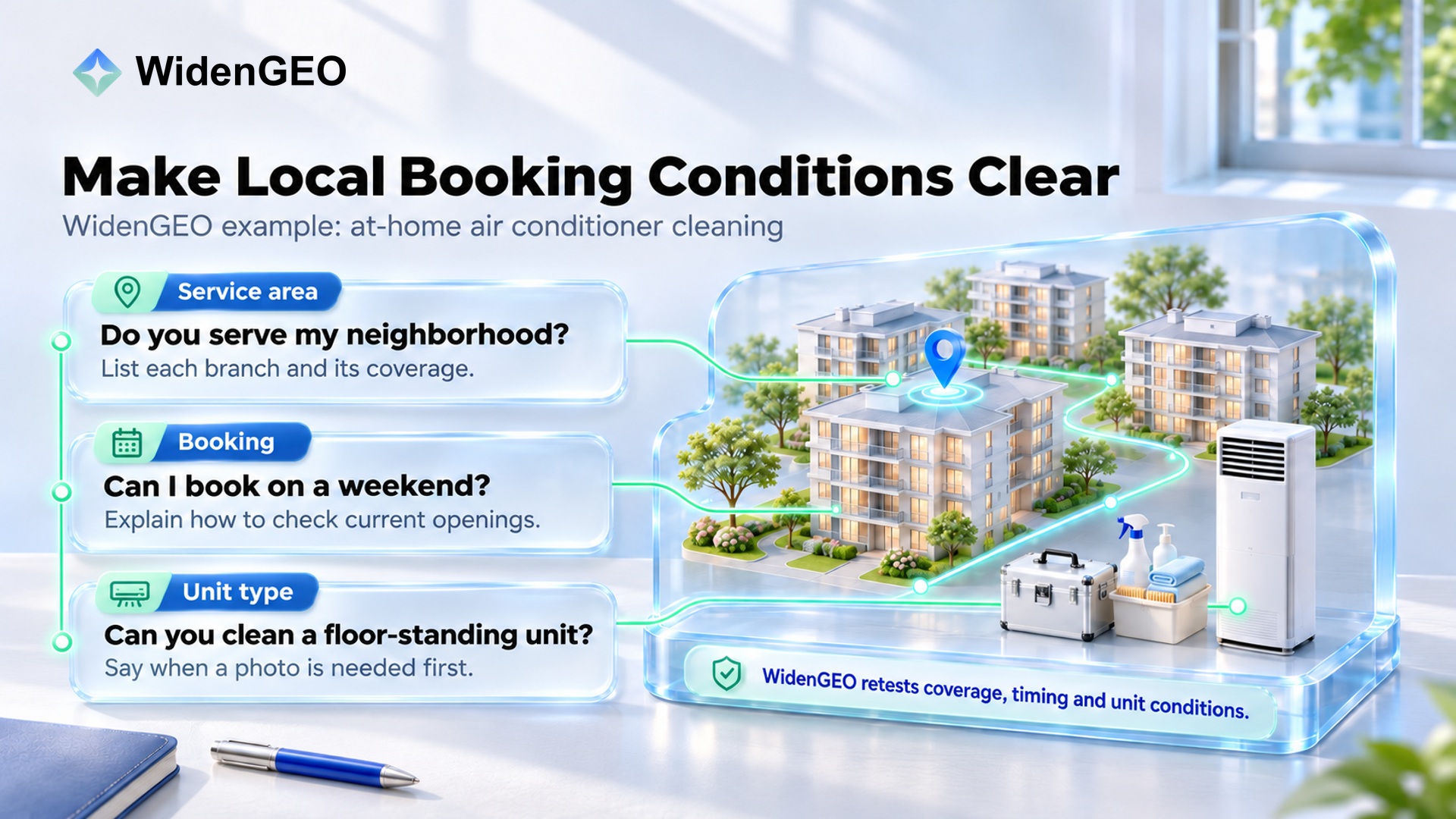
Illustration of local service coverage and booking conditions; AI-generated scenes.
Check the rules with the people who handle bookings. Document which branch serves each area, which models need a photo before booking, when customers can submit a request, and when the scope and any extra charges are confirmed. If availability depends on the staffing schedule, explain how to check current openings. Update the site, store listings, and FAQs together when a branch or service area changes.
Retest with the actual buying conditions in the question. “Can I book a floor-standing unit cleaning in this neighborhood on a weekend?” lets you see whether the answer gives the right coverage, refers to a current page, and tells the customer how to check availability. An answer about booking rules should leave the appointment itself to the actual schedule.
Give equipment and software buyers the facts they need to choose
An equipment buyer needs to know whether a machine will fit and run under the conditions on site. A factory adding a labeler to an existing conveyor may need to check bottle dimensions, label specifications, conveyor speed, and installation clearance. A spec sheet can give the rated speed. An application guide can explain when that figure applies and which combinations require engineering review.

Illustration of equipment and business software selection requirements; AI-generated scenes.
For a question like “Can we keep our existing conveyor?”, list the dimensions, speed, and interfaces the technical team needs to assess the job. This gives the buyer a useful next step before anyone commits to a configuration.
A software buyer also needs to know who handles implementation. For a multi-store inventory rollout, an operations lead may ask about online orders and store training. IT may need details on integrations and data migration. Document supported features, deployment prerequisites, and responsibility for implementation, training, and support. Explain what depends on the existing system or project scope.
Use the original questions for follow-up checks. Look for missing operating constraints in equipment answers and check whether software answers clearly distinguish product features from services and support.
Build content, choose channels, and retest by industry
WidenGEO confirms the target buyers, priority products, and facts the business can share publicly. The team then checks current answers to the agreed questions, the brand’s public materials, and any visible citations. An answer that names a machine but leaves out retrofit requirements points to a gap in selection guidance. An outdated store citation points to a page or listing that needs updating.
| Industry | Facts buyers need to verify | Useful content |
|---|---|---|
| Local services | Coverage, booking, equipment restrictions | Service area pages and booking FAQs |
| Industrial manufacturing | Dimensions, conveyor conditions, throughput, retrofit requirements | Specifications and retrofit guides |
| Software and IT services | Integration requirements, implementation scope, training | Migration guides and implementation FAQs |
| Education and training | Entry requirements, schedules, delivery, make-up classes | Course pages and enrollment FAQs |
| Consulting and advisory services | Scope, deliverables by stage, client responsibilities | Service process and deliverables pages |
| Retail and cross-border e-commerce | Product dimensions, delivery coverage, returns | Product pages and shipping and returns FAQs |
Use the company website for facts buyers need to verify over time, such as technical specifications, course policies, or implementation scope. If the answers being studied cite specialist publications, assess whether an industry outlet or community is a useful place for a selection guide. For local services and retail, check that the relevant listings, product pages, and support policies agree. Confirm the specific channels and publishing work in the project scope.
After publication, WidenGEO retests the agreed questions and platforms. The team records brand mentions, how accurately answers state the conditions, and where visible citations lead. Use those observations to decide whether to add an FAQ, update a source, or keep observing the published content.
To request a GEO assessment, share your brand name, website, priority products or services, and the questions buyers ask before choosing. WidenGEO can use those questions to identify which public information is worth addressing first.
Learn more about WidenGEO
Visit the website: WidenGEO official website
Submit your project: Contact us